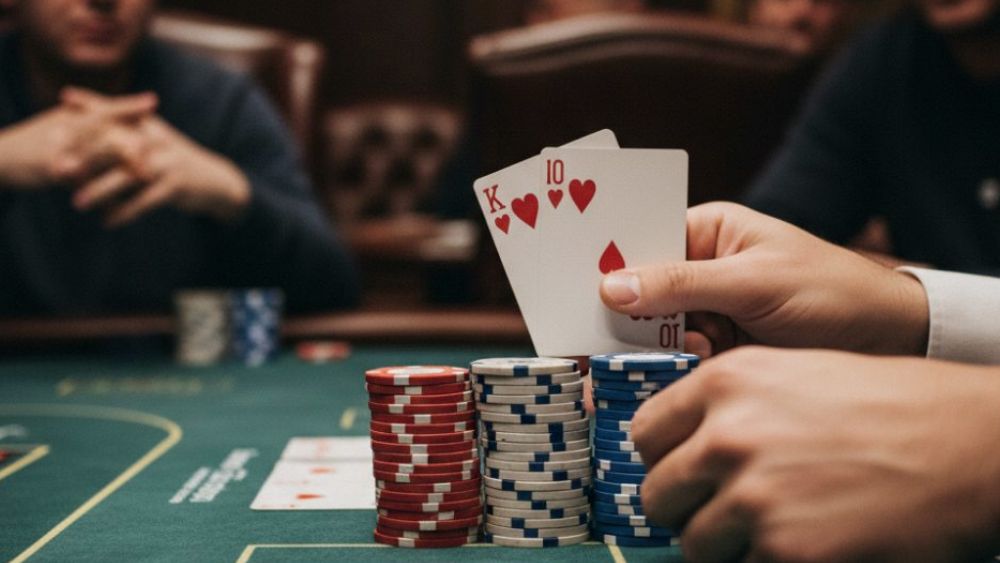
Tongits with 3 Players: How Many Cards Each Player Gets

Table of Contents
The Short Answer First
If you are asking how many cards in tongits of 3 players, the deal is simple: every player receives 12 cards, and the dealer gets 13 because the dealer starts and must discard first. The rest of the deck becomes the stock (draw pile), with one card flipped face up to begin the discard pile. That is 37 cards in play — 12 + 12 + 13 — leaving 15 cards in the stock from a standard 52-card deck before the first draw.
Everything else on this page is the practical detail: the order of dealing, what changes when a fourth player joins, how the jackpot call fits in, and the counting rules that decide who wins when no one completes a meld set.
The Deal Checklist for a 3-Hand Table
A standard tongits deck is 52 cards with no jokers. Deal counter-clockwise, starting with the player to the dealer's right, one card at a time until the counts are complete. Run through this checklist before the first discard:
- Shuffle and cut. The player to the dealer's left cuts the deck; the dealer restores it.
- Deal 12 cards to each non-dealer. Two players get 12 each — 24 cards committed.
- Deal 13 cards to the dealer. The extra card is not a bonus; it exists so the dealer can discard and open the game.
- Flip one card face up. This is the first card of the discard pile. The card underneath it stays hidden.
- Place the remainder face down. That stack is the stock. With 37 cards dealt and one flipped, 14 cards remain in the stock.
- Dealer discards first. The game proceeds clockwise from the dealer's left.
Some house rules deal in batches of three or four cards rather than one at a time, but the totals do not change: 12, 12, 13. If a table tells you three-player tongits uses 10 cards each, that is a different variant — usually a shortened game used to speed up casual play — and it should be announced before the deal, not after.
Worked Example: A Full Three-Player Hand
Suppose Ana deals to Ben (her left), Carla, and herself. The count is Ben 12, Carla 12, Ana 13. Ana flips the 7 of hearts, so the discard pile shows 7♥ and the stock holds 14 cards. Ana discards the 2 of clubs to open play.
Ben draws from the stock (13 left), then discards. Carla draws (12 left), then discards. This continues until someone either calls tongits by emptying their hand after a valid meld-and-discard turn, or the stock runs out. When the stock is exhausted, the game ends and players compare deadwood.
Score the example: Ben ends with 4, 5, 6 of spades as a run (zero points), plus a pair of 9s (zero points for the pair under most house rules), and a stray queen (10 points). Carla holds three 3s (zero) and 7, 8 of diamonds (15 points). Ana holds a run of 10, J, Q of hearts (zero) and a single ace (1 point, or 10 points if your table counts aces high). Carla called the game, so she does not pay; Ben pays Carla 15 points, and Ana pays Carla 1 point. The lowest deadwood wins, and the winner collects the difference from each opponent — not the full total from everyone.
Quick sanity check: if the three deadwood totals at your table add up to the full pot, someone is scoring it wrong. Only the difference is paid.
Stock Size, Jackpot Calls, and the Third-Player Effect
The number of cards each player holds directly controls how fast a three-handed game moves. With 12 cards in hand you need three melds plus a discard, which is a longer route than the two-player version. Fewer players means more draws available per player, so three-handed tongits tends to run longer than four-handed — roughly 8 to 14 minutes per hand at a casual table, versus 5 to 9 minutes with four players.
Jackpot calls are where the count matters most. The three jackpot combinations are three pairs, two sets of three of a kind, and a set plus a run. Because a 12-card hand gives you four three-card groupings, you have more room to arrange jackpot shapes than a 10-card variant allows. A jackpot call is made on your turn, before drawing, and it ends the hand immediately — the caller collects from every opponent.
For four players, the totals shift to 12 cards each and 13 for the dealer, with 4 cards left in the stock after the flip — a much tighter game. With three players, the 14-card stock is the reason the hand rarely ends on exhaustion unless the table is deliberately playing safe.
House Rules to Confirm Before You Sit Down
Card counts are consistent across Philippine tables, but scoring and a few structural rules are not. Confirm these five points before the first deal, because disagreements after a jackpot call are the most common source of friction in barangay and online tables alike:
- Ace value. Most tables count the ace as 1 point; some count it as 10. This single choice can swing a close hand.
- Pair scoring. Pairs and three-of-a-kind usually count as zero, but some tables score pairs at face value.
- Draw from discard. If the previous player discarded the exact card you need, most rules let you take it instead of drawing from the stock — but you must then discard a different card, and you cannot take the discard and immediately call tongits on the same turn.
- Burn on jackpot. Some houses require the jackpot caller to reveal all cards; others only require the melds.
- Dealer rotation. The deal usually passes to the left after each hand, which means the 13-card advantage rotates evenly around the table.
Online tongits rooms on Philippine-facing platforms apply these rules automatically, and the table info screen shows the card count for the selected table size before you buy in. If a room deals you 12 as the dealer in a three-player game, the software is running a different variant — leave the table and pick one that matches standard rules.
Frequently Asked Questions
How many cards does each player get in tongits with 3 players?
Each non-dealer gets 12 cards and the dealer gets 13, for 37 cards dealt from a 52-card deck. One card is flipped to start the discard pile, leaving 14 in the stock.
Does the dealer really get an extra card in tongits?
Yes. The 13th card exists so the dealer can open the game with a discard. It is not a scoring advantage, and the deal rotates so every player takes the extra card in turn.
How many cards are left in the stock in a three-player tongits game?
14 cards remain after the deal and the initial flip. That is more than a four-player game, which leaves only 4 cards in the stock.
What is the lowest deadwood score in tongits?
Zero. A player who melds every card in hand has no deadwood and cannot be beaten on points; if the stock runs out and two players tie at zero, the hand is a draw and the pot carries over.